
1808 – 1898 · Austin, Texas
The Life of
Jacob Fontaine
Born enslaved. Died a pioneer. The story of a man who shaped Austin's soul — one church, one newspaper, and one community at a time.
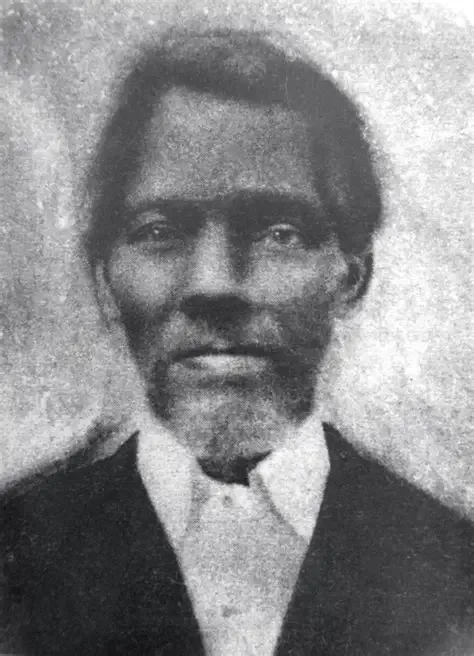
Jacob Fontaine
Pastor · Pioneer · Publisher
Who Was Jacob Fontaine?
A Man Who Built
What Did Not Exist
Jacob Fontaine arrived in Austin in 1839 as an enslaved man. He left it in 1898 as one of its most consequential citizens — a Baptist preacher, a political organizer, a newspaper publisher, a civic advocate, and the founder of six churches across Central Texas.
He did not wait for freedom to begin building. While still enslaved, he preached in church basements. He organized in secret. He prepared. And when emancipation came, he was ready — not just to survive, but to lead.
His story is Austin's story — a story of faith, resilience, and the audacity to build something lasting from almost nothing.
"He would preach in the afternoons to Blacks in the basement of the old Methodist church — years before emancipation gave him the right to do so openly."
A Life in Full
Eight Chapters
of One Extraordinary Life
Born Enslaved in Arkansas
Jacob Fontaine was born into bondage in Arkansas in 1808. He passed through the hands of several enslavers — among them the Tuttle and Isaacs families — before coming under the ownership of Rev. Edward Fontaine, a great-grandson of Patrick Henry. In 1839, Edward Fontaine moved to Austin, Texas, as personal secretary to Texas President Mirabeau B. Lamar, bringing Jacob with him. It was the beginning of a lifelong, complicated, and ultimately transformative relationship with the city of Austin.
Preaching in the Basement
Jacob served as sexton at St. David's Episcopal Church in Austin in 1855. By 1860 he was attending First Baptist Church — the same congregation as Sam Houston. But even while serving White congregations, Jacob was quietly building something of his own. In the afternoons, he preached to Black Austinites in the basement of the old Methodist church at Brazos and Tenth Streets. In 1864, he and other members of the Black congregation began meeting secretly to organize a break from the White church. Freedom was coming. Jacob was already preparing for it.
Founding the First (Colored) Baptist Church
After emancipation, Jacob Fontaine wasted no time. In 1867 he founded the First (Colored) Baptist Church in Austin — a congregation born of years of quiet resistance and faithful preparation. That same year, he helped found the St. John Regular Missionary Baptist Association, originally known as the Travis County Association, and was elected its first moderator. He was not merely a member of the new Austin — he was one of its architects.
Six Churches Across Central Texas
Over the next two decades, Jacob planted churches across the region: Mount Zion at Williamson Creek (1873), Good Hope in Round Rock (1874), Sweet Home in Clarksville (1877), New Hope in Wheatsville (1887), and St. Stephen's at Waters Park (1887). Each congregation was a community anchor — a place of worship, education, and mutual support for Black Texans navigating the turbulent years of Reconstruction and its aftermath.
Politics, Commerce & Advocacy
Jacob was not only a preacher. He was a janitor in the old Land Office Building, a grocer, a laundry operator, a bookseller, and a medicine dealer. He became active in Republican and Greenback party politics during Reconstruction in Travis County. In 1881–82, he emerged as Austin's leading Black advocate for the establishment of the University of Texas in Austin — traveling to San Antonio, Seguin, and Marlin to secure the Black vote for his cause. He understood that education was inseparable from freedom.
The Austin Gold Dollar
In 1876, Jacob founded the Austin Gold Dollar — one of the first Black weekly newspapers in the South, and the first newspaper under Black ownership in Austin. He started it with sixty dollars earned from the investment of a single gold dollar given to him by his sister Nelly Miller in 1872, when they were reunited in Mississippi after a twenty-year separation caused by slavery. The paper was published from his two-story home at 24th and Orange Street — now an Austin landmark.
The Fontaine Family of Austin
Jacob's wife Melvina — known as Viney — was a housekeeper at the Woodlawn plantation near the Austin home of ex-governor Elisha M. Pease, and had cooked at the Governor's Mansion. Their daughter Melissa married a custodian, Joe Gordon, at the Governor's Mansion on March 18, 1870. They had two other daughters. Jacob and his minister son Israel Jacob Fontaine II later founded a local chapter of the Colored Brothers of the Eastern Star. The Fontaine name became synonymous with faith, community, and the written word in Austin.
Three Generations of Leadership
Jacob's work was continued by his son George, a depot porter who published the Silver Messenger in 1897–98. George's son, Rev. Israel Jacob Fontaine III, founded the Fontaine Memorial Baptist Church in 1962 and published the Austin Express and the Fort Worth Community News before taking up advertising and insurance work in Austin. Jacob Fontaine died in 1898 — but the legacy he built has never stopped growing.

Rooted in Austin
A City Shaped
By His Hands
Jacob Fontaine's Austin was a city in constant tension — between the promise of freedom and the persistence of oppression, between the old order and the new. He navigated it all with uncommon courage.
He advocated for the University of Texas. He organized Black voters. He ran a grocery, a laundry, a bookstore. He preached, published, and planted churches. He was not a man on the margins of Austin's history — he was at its center.
1839
Arrived in Austin
1867
Founded First Baptist
1876
Launched Gold Dollar
1881
UT Austin Advocate
The Fontaine Family
Melvina, Israel,
George & Beyond
Jacob's wife Melvina — known as Viney — was a woman of remarkable standing in Austin. She had cooked at the Governor's Mansion and served as housekeeper at the Woodlawn plantation near the home of ex-governor Elisha M. Pease. Their daughter Melissa married Joe Gordon at the Governor's Mansion on March 18, 1870.
Jacob and his minister son Israel Jacob Fontaine II founded a local chapter of the Colored Brothers of the Eastern Star. Son George published the Silver Messenger in 1897–98. Grandson Rev. Israel Jacob Fontaine III founded the Fontaine Memorial Baptist Church in 1962 and published two newspapers of his own.
Three generations. One name. An unbroken thread of faith, publishing, and service running through Austin's history.

Continue
Exploring
Dive deeper into Jacob Fontaine's ministry, his historic newspaper, or connect with us to share what his legacy means to you.